
- Four core processes in-house — milling, turning, mill-turn, grinding, without hand-off delays.
- Step count sets the tier — each operation adds setup, run, and inspection time to the calendar.
- Surface finishing lands long — anodizing, plating, powder coating push a part into the 30-day tier.
- MOQ 1 piece — qualify a first article without blocking the plan.
How does each machining service feed the schedule?
Every process adds its own setup, run, and inspection time, and the delivery date is the sum of those line items. A part that needs turning, then a milled feature, then grinding carries all three on the calendar — plus the hand-off time between them. When those processes run in one shop, the part moves between operations inside a single schedule, with no queue and no freight between suppliers. That is the difference between a delivery date you can plan and one that accumulates delay at every boundary.
Which services run in-house?
The metal-cutting core runs in one 6,800 m² facility, which is itself a lead-time decision: in-house processes move between operations without the queue of a hand-off to another shop.
| Service | Capacity | Max workpiece |
|---|---|---|
| CNC milling (3-axis) | 50+ centers | 1300 × 700 × 600 mm |
| CNC milling (4-axis) | 20+ centers | |
| CNC milling (5-axis) | 20+ centers | |
| CNC turning | 25+ lathes | Ø720 × 1280 mm |
| Mill-turn | Multi-task centers | Single-setup complex geometry |
| Precision grinding | 7+ (surface / centerless / cylindrical) | ±0.002 mm finishes |
How does surface finishing affect lead time?
Surface finishing is the step that most reliably pushes a part into the long tier. Anodizing, plating, powder coating, and painting each add their own queue and inspection on top of the machining steps before them, and heat treatment does the same. A part that is otherwise simple becomes a 30-day part the moment it needs a finish. The step is named on the quote, so the schedule is transparent rather than discovered mid-order.
In-house ovens reach 500 °C, covering aluminum aging and low-temperature steel stress relief; titanium stress relief above that runs through a qualified partner, which adds its own scheduling step. Knowing that boundary in advance is what lets a buyer budget the calendar correctly.
How do services map to the 3 / 7 / 30-day tiers?

| Complexity | Approx. lead time | Typical profile |
|---|---|---|
| Simple | ~3 days | Few operations, single material, no finishing |
| Standard | ~7 days | Multiple operations, standard tolerances |
| Complex | ~30 days | 10–20 process steps, or surface finishing / heat treatment |
The tier is set by step count, not by price or by part size. Two parts of identical size can sit in different tiers because one has three operations and the other has twelve. The quote states the step count so the tier is verifiable.
How does single-setup machining shorten the calendar?
Every re-clamping of a part is a scheduled event — a setup, a locating, and a re-inspection. Mill-turn and multi-task machines combine turning and milling in one clamping, removing those events from the schedule entirely. The part's geometry is also more consistent, because features that must be concentric are cut from a single reference rather than re-established across fixtures. Fewer setups means fewer schedule items and fewer places for a delay to hide.
What workpiece sizes can you machine?
Milling handles workpieces up to 1300 × 700 × 600 mm, and turning up to Ø720 × 1280 mm. The envelope matters for scheduling because a part that fits runs in one setup, while a part that does not fit gets flagged before quoting. The schedule you are given is the schedule the part actually needs, not an optimistic guess.
Why does MOQ 1 piece keep qualification off the critical path?
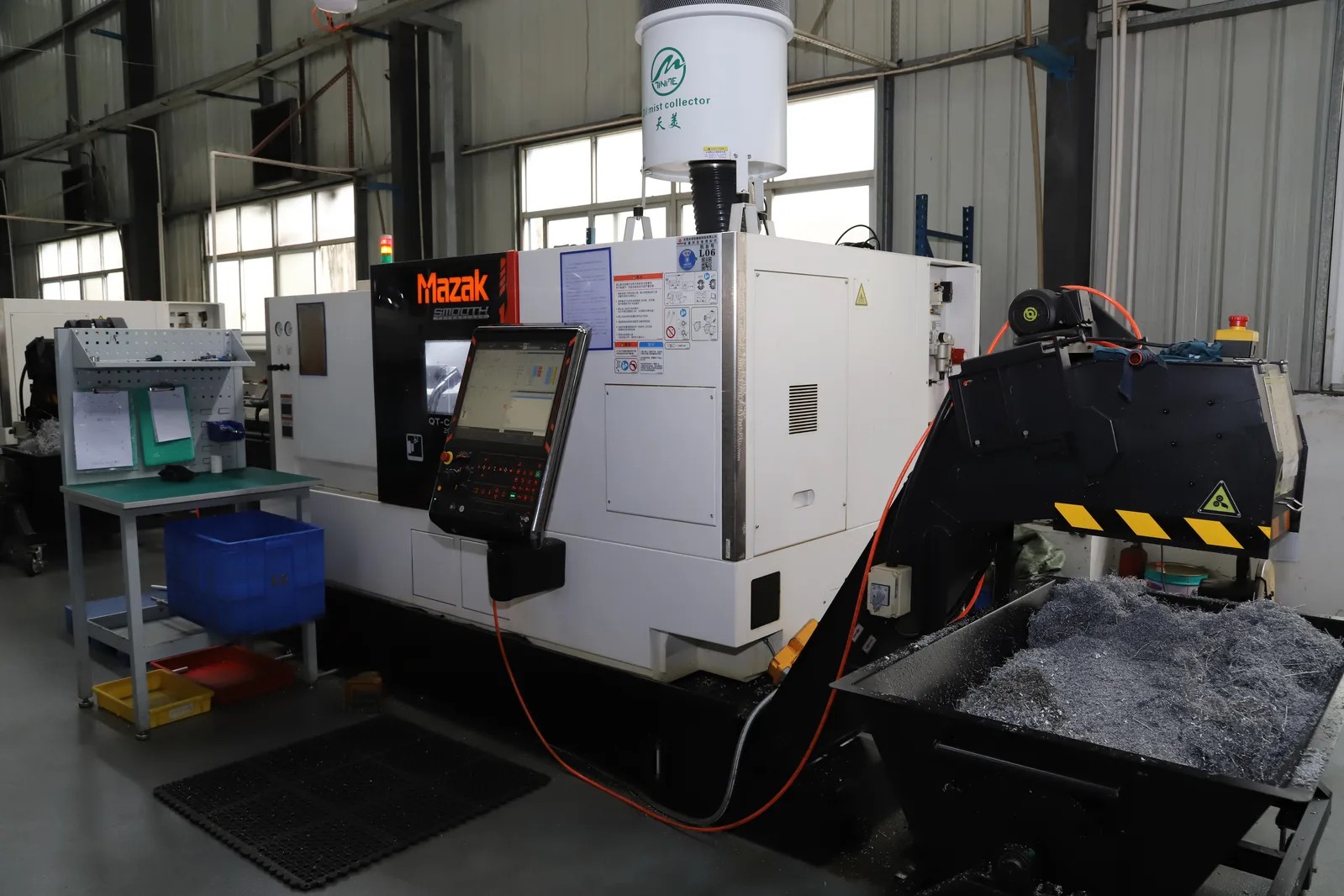

An MOQ of 1 piece means you can order and clear a first article before the production order is even scheduled. That sequencing keeps qualification off the critical path: the first article validates the design and the process while your production plan is still open, so the volume order runs against a proven, predictable clock. Low-volume work runs on the same machines and the same discipline as production — there is no separate, slower prototype line.
What should you confirm in a services agreement before scheduling?

Before you put a date on the calendar, confirm four things in writing: which processes run in-house and which through partners, how many process steps your part requires, which tier that step count lands in, and how a quality hold is isolated without shifting the rest of the schedule. A supplier that answers all four is giving you a plan, not a promise.
Send a drawing and the shop will map your part to a lead-time tier with the step count stated, so your delivery date is something you can hold it to.
How do you choose between milling, turning, and mill-turn for a given part?
The process call is made by the part's geometry, not by preference, and getting it right is a lead-time decision. Round, symmetric parts — shafts, pins, bushings, fittings — belong on a lathe, where the stock rotates and the tool feeds. Prismatic parts with flats, pockets, holes, and slots belong on a mill, where the tool rotates and the stock is fixed. A part that needs both round and prismatic features is where the choice gets interesting.
| Part geometry | Right process | Why it affects the schedule |
|---|---|---|
| Round, symmetric | CNC turning | One setup holds concentric features in a single reference |
| Prismatic, flat features | CNC milling | 3/4/5-axis reach features turning cannot reach |
| Round plus flats, cross-holes, keyways | Mill-turn | One clamping deletes re-setup and its queue |
| Tight-tolerance surfaces | Precision grinding | Adds a finishing step with its own queue |
The schedule lesson is that a wrong process call multiplies steps. A round part forced through milling needs extra setups to reach all around it; a prismatic part forced through turning needs a milled follow-up anyway. The right first call keeps the routing short, and a short routing is a short tier.
What DFM rules move a part down a tier?
Design-for-manufacturing rules are schedule rules in disguise, because a geometry that is easy to cut is a geometry that is fast to cut. The common ones, and what each does to the calendar:
- Internal corner radii. A radius too small for a standard cutter forces a slower toolpath or a finishing operation. A radius of roughly one-third the wall thickness or larger keeps the tool moving.
- Hole depth-to-diameter ratio. A hole much deeper than its diameter needs a specialty drill and slower pecking; keeping the ratio moderate removes the extra cycle time.
- Thin walls. A wall that flexes under cutting force produces chatter and rework, pulling the part toward the long tier.
- Deep, narrow slots. A slot that a standard end mill cannot clear in one pass adds multiple passes and tool changes.
None of these rules force you to redesign a functional part. They tell you, before quoting, which geometries are quietly buying schedule you did not need, and which ones you can adjust to land in a faster tier without changing what the part does.
How do the finishing options differ in schedule cost?
Not all finishing steps cost the same calendar time, and if you know the difference, you can pick the finish that meets the function without buying the longest queue. The spread:
| Finish | Typical purpose | Schedule weight |
|---|---|---|
| Anodizing (Type II) | Corrosion resistance, color on aluminum | Standard finishing queue — a longer tier |
| Hard anodizing (Type III) | Wear resistance, thicker oxide layer | Longer process — sits deeper in the long tier |
| Plating (zinc, nickel, chrome) | Corrosion, conductivity, appearance | Own queue and inspection; named on the quote |
| Powder coating | Durable painted finish | Separate line; batch-dependent timing |
| Passivation | Stainless steel corrosion resistance | Relatively light step, but still a queue |
The point is that "a finish" is not one thing. Two parts can both say "anodized" on the print and carry very different schedule weights because one is Type II and the other is Type III. The quote should name the finish precisely enough that its schedule cost is visible, and you should ask for that precision rather than accepting "finishing" as a single line item.
How does in-house versus outsourced finishing change the calendar?
A finishing step is either inside your supplier's schedule or inside someone else's, and that boundary is where lead time leaks. An in-house step — like the aluminum aging and low-temperature steel stress relief the shop runs in ovens up to 500 °C — sits inside the same schedule as the machining, so it queues and clears without a hand-off. An outsourced step, like titanium stress relief above that temperature through a qualified partner, adds a queue the shop does not fully control.
The practical difference is visibility and priority. When a step runs in-house, the shop can sequence it against the machining that feeds it and expedite it when your date demands. When it runs through a partner, the shop can schedule it, but the partner's other customers sit in the same queue. Neither is a reason to avoid the step — some finishes and treatments belong outside. Your job is to know which steps are outside and to see them named on the quote, so the long tier is understood rather than discovered.
Read the service list the way a planner reads a routing: each line is a step, each step is a setup plus a run plus an inspection, and the delivery date is their sum plus the queues between them. A shop that consolidates the metal-cutting core — milling, turning, mill-turn, and grinding — in one 6,800 m² facility removes the hand-off queues that a multi-supplier routing accumulates. That consolidation is the quiet lead-time win behind the service list.
The services, in short, are not a menu of separate products — they are the building blocks a routing is assembled from, and the delivery date is the schedule of that assembly. Map your part to the right blocks, keep the step count low, and the tier takes care of itself.
What this shop actually runs
If you ask for capability evidence, you deserve a specific answer. This facility operates 100+ CNC machines across 6,800 m2 in Dongguan, China, staffed by 100+ people. The machines, listed by category:
- 5-axis machining centres (10+) - Mazak VARIAXIS I-600 (510/910/510 mm travel, 12,000 rpm, 22 kW, 71.6 N·m, 30-tool BT40) and Mazak INTEGREX I-250H S (B-axis 0.0001°, 24 kW, 124 N·m, 38-tool HSK-A63). Run on compound-angle parts, single-setup multi-face prismatic work, and aerospace fittings where datum transfer loss is unacceptable.
- 3-axis / 4-axis machining centres (50+) - Brother SPEEDIO S500Z2N / S700Z2N (10,000 rpm, 14/21-tool ATC, 0.7 s tool-to-tool, Z-axis 2.2 G) and Mazak VCE-430A L / VCE-570C L (10,000 rpm, 118 N·m, 24-tool ATC). Run on prismatic parts, plates, brackets, housings.
- Swiss-type turning centres (10+) - Citizen Cincom A20-3F7 (Φ20 mm, 10,000 rpm), TSUGAMI B0206-III / B0205-III (Φ20 mm, 0.1 µm), STAR SR-32JII / SR-32J Type N (Φ32 mm, 8,000 rpm). Run on long, slender rotational parts at ±0.002 mm.
- CNC turning centres (20+) - HEADMAN T70M/1250 (720 mm swing, 117 mm bore, 3,000 rpm, BMT75 12-station turret). Run on shafts, bushings, flanges up to ±0.002 mm.
- Wire EDM (5+) - Sodick AQ535L (550/350/300 mm travel, ±20° taper, 800 kg workpiece). Run on hardened tool steel, internal splines, sharp internal corners that milling cannot reach.
- Inspection: Hexagon CMM + 20+ gauges - Hexagon CMM for coordinate measurement, plus vision system, profilometer, hardness tester, coating thickness gauge, XRF for material verification. The 10:1 rule (gauge 10x more accurate than the band) is applied to every feature.
- Machine highlights - VARIAXIS I-600: one-setup multi-face 5-axis + MAZA-CHECK auto-calibration; INTEGREX I-250H S: DONE-IN-ONE mill-turn, B-axis 0.0001° + Ai thermal shield; SPEEDIO S500Z2N / S700Z2N: Z-axis 2.2 G + 0.7 s ATC; Swiss-type: guide-bush switchable + 0.1 µm resolution.
Tolerance bands: ±0.003 mm milled, ±0.002 mm turned, ±0.002 mm ground or wire-cut. Capability indices: Ppk >= 1.67 at the initial study; Cpk >= 1.33 ongoing in production.
Certifications: ISO 9001:2015 (116024/A/0001/UK/En) · IATF 16949:2016 (131941/A/0001/SM/En, design clause 8.3 excluded) · ISO 14001:2015 (116024/B/0001/UK/En), held by Dongguan Zhuohang Ltd (USCC 91441900MA4UWT6X39, since 2005).
Service area: we supply Austria, Belgium, the Czech Republic, Denmark, France, Germany, Greece, Hungary, Ireland, Italy, the Netherlands, Spain, Sweden and the United Kingdom in Europe; Brazil, Canada, Mexico and the United States in the Americas; China, Israel, Japan, Singapore and Sri Lanka in Asia; Australia and New Zealand in Oceania; and South Africa in Africa, with worldwide delivery from China.
Contact: Felipe Iglesias, [email protected], +86 13126536955.
Map your part to a delivery tier.
Send your drawing to [email protected] or call +86 13126536955 for a step-count and lead-time breakdown.
Frequently Asked Questions
How does each machining service feed the schedule?
In short, Each process adds its own setup, run, and inspection time, so a part that needs turning plus milling plus grinding carries the sum of all three on the calendar. Consolidating those processes in one shop removes the hand-off delays between separate suppliers.
Which services run in-house?
CNC milling (3, 4, and 5-axis), CNC turning, mill-turn, and precision grinding run in-house across 100+ production machines. In-house processes move between operations without the queue and freight time of a hand-off to another shop.
How does surface finishing affect lead time?
Surface finishing adds a step with its own queue and inspection, so a part that needs anodizing, plating, or powder coating falls into the longer 30-day tier. The step is named on the quote so the schedule is transparent.
What workpiece sizes can you machine?
Milling handles workpieces up to 1300 × 700 × 600 mm, and turning handles up to Ø720 × 1280 mm. A part within the envelope runs in one setup; a part outside it is flagged before quoting, so the schedule is realistic.
Do you take single-part and low-volume work?
Yes. The MOQ is 1 piece, so a first article can be ordered and validated before volume is committed. Low-volume work runs on the same machines and the same discipline as production, not on a separate lower-priority line.
How do services map to the 3 / 7 / 30-day tiers?
A simple single-material part with few operations lands in the ~3-day tier; a multi-operation part in ~7 days; and a part with 10–20 process steps or surface finishing in ~30 days. The tier is set by step count, stated up front.
Continue reading: CNC Turned Components Factory · CNC Turned Components · CNC Turned Components Parts Manufacturer
Standards referenced on this page
- ASTM B211/B211M-19 — Standard Specification for Aluminum-Alloy Rolled or Cold Finished Bar, Rod, and Wire
- ASTM B348/B348M-21 — Standard Specification for Titanium and Titanium Alloy Bars and Billets
- ISO 9001 — Quality management systems — Requirements